Training
Yes, you can teach an older dog new tricks
Pete is 9½ and learning to spin. Here’s how we keep practice short, gentle and fun for a senior dog.
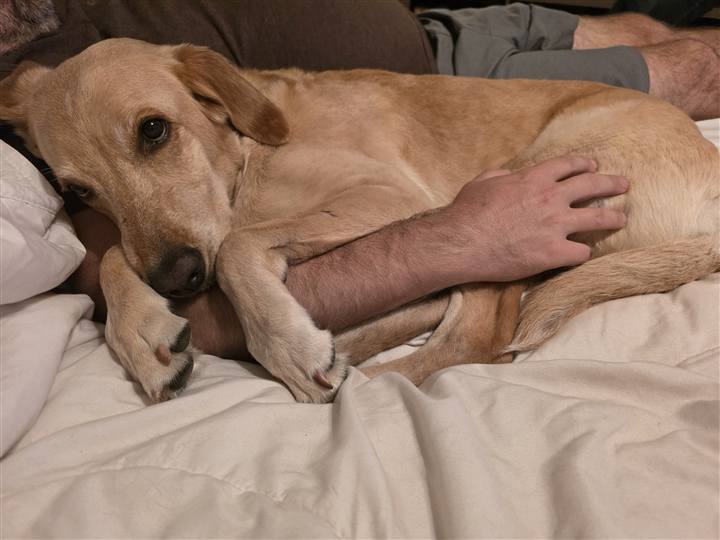
Pete already knows sit, shake, down and stay. At 9½ he’s slowed down, but his brain hasn’t. Learning something new keeps him engaged, gives him confidence, and gives us a few minutes of his full attention every day. Right now he’s working on spin.
How we keep it senior-friendly
- Short sessions. Three to five minutes, once or twice a day. Stop while he’s still into it.
- Tiny treats. Small pieces of something he loves. For Pete that’s cheese.
- Low-impact tricks only. No jumping, no standing on hind legs, nothing that twists hard on old joints.
- End on a win. Finish with something he already knows, like sit, so every session ends well.
- Ask your vet if your dog has arthritis or any pain, before adding anything physical.
Easy tricks for older dogs
Touch
Your dog bumps their nose to your open hand. Simple, no strain, and handy for moving them around.
Find it
Hide a treat while they wait, then say “find it.” Sniffing is great brain exercise for a dog who can’t run like they used to.
Chin rest
Your dog rests their chin in your hand and holds still. Calm, sweet, and useful at the vet.
Spin (slowly)
Lure them in a wide, slow circle with a treat. Keep it gentle and skip it if they’re stiff that day.
Go to your bed
Send them to their bed and reward them for settling. Good for meal times, visitors and dogs who eat alone.
Track it, or it doesn’t happen
We set one trick, one behavior and one exercise goal each week, and check off the days we practice. Seeing “3 of 7 days” is what keeps us going.